
Arizona’s Sonoran Desert is one of the toughest testing grounds in North America for exterior metalwork. Between 115°F+ summer afternoons, intense ultraviolet radiation, alkaline caliche dust, hard-water irrigation overspray, and sudden monsoon microbursts, outdoor gates in Phoenix, Glendale, and the West Valley work hard 365 days a year. At Steel Creations & Fabrication, we build our custom courtyard gates, side yard gates, and RV gates from heavy-gauge powder-coated steel to thrive in the Valley—and with a simple seasonal gate maintenance routine, your gate will operate smoothly and look brand new for decades.
How Phoenix Heat, UV, Hard Water, and Monsoons Affect Steel Gates
Many homeowners assume rust only happens in humid coastal cities, and then feel surprised when they spot chalky finishes, stiff latches, or orange corrosion at the base of a gate post in Phoenix or Peoria. In the Valley, gate wear comes from four specific desert stressors:
- Extreme UV & Surface Temperatures: West- and south-facing steel gates in Glendale, Surprise, and Goodyear absorb direct solar radiation that pushes metal surface temperatures past 160°F in summer. Fine desert dust baked onto the finish acts like sandpaper if wiped dry, and unwashed sunscreens, oils, or harsh chemicals accelerate UV chalking.
- 50°F Daily Thermal Swings: Desert temperatures regularly swing 35°F to 50°F between dawn and late afternoon. Steel expands in afternoon heat and contracts overnight, which can subtly shift latch alignment on wide double gates and vehicle entry gates, while baking thin household lubricants dry inside hinges.
- Hard-Water Irrigation & Pool Splash: Phoenix-area municipal and well water is heavily mineralized. When a landscape sprinkler or drip emitter sprays a gate every morning, calcium and magnesium crusts bake onto the powder coat, eventually etching the finish and trapping moisture against weld seams.
- Monsoon Haboobs & Flash Runoff: From June through September, dust storms pack fine abrasive silt into hinge barrels, key cylinders, and sliding gate tracks, followed by wind-driven rain that pools around gate posts if drainage paths are blocked by gravel or leaves.
The 4-Season Phoenix Gate Maintenance Calendar
You don’t need complicated tools to protect your investment. Following a 15-minute seasonal check matched to Maricopa County’s weather cycle prevents 90% of common gate repairs:
1. Spring Pre-Summer Check (March – May)
- Wash & Inspect the Powder Coat: Give the entire gate a gentle wash to remove winter dust and pollen. Inspect the bottom rails, picket welds, and latch strike plate for any rock chips from string trimmers or landscaping tools, and touch them up before summer heat and monsoon moisture arrive.
- Lubricate Hinges Before Triple-Digit Heat: Apply high-temperature grease to hinge zerk fittings (on heavy barrel hinges) or a heat-resistant silicone/PTFE lubricant to standard hinges so summer heat doesn’t cause metal-on-metal squeaking.
- Check Latch & Deadbolt Alignment: Test how centered the latch bolt sits inside the strike plate. If the bolt is already rubbing the top or bottom edge of the strike opening in mild spring weather, afternoon thermal expansion in July may cause it to bind.
2. Summer & Monsoon Season Care (June – September)
- Post-Haboob Low-Pressure Rinse: After a major dust storm, rinse your Phoenix courtyard gate or RV gate with a standard garden hose nozzle before wiping anything down. Never dry-wipe desert grit off powder-coated steel, as silica dust will leave fine swirl scratches in the finish.
- Keep Sliding Tracks & Post Bases Draining: On rolling or V-track RV gates, sweep gravel and caliche mud out of the ground track so steel rollers don’t flat-spot. Around swinging gate posts, pull decomposed granite and leaf litter back 1 to 2 inches from the base of the steel post so monsoon rainwater drains away quickly instead of sitting against the powder coat.
- Latch Your Gate During Microburst Warnings: High monsoon gusts can slam an unlatched gate violently against a stucco column or masonry stop, cracking the wall or bending a mechanical closer.
3. Fall Post-Monsoon Tune-Up (October – November)
- Deep Clean & Hard-Water Check: Wash the gate with mild pH-neutral dish soap or automotive wash soap and a soft microfiber mitt. Walk your yard while the irrigation system runs to make sure no sprinkler heads or misting lines are spraying the gate or steel posts.
- Inspect Wood or Composite Infill Slats: If your RV gate or side yard gate uses wood tongue-and-groove slats inside a steel frame, autumn is the ideal time in Phoenix to reseal or stain the wood after summer UV exposure and check that carriage bolts are snug.
4. Winter Hardware & Automation Check (December – February)
- Keyways & Lock Boxes: Blow dust out of mechanical keyways using compressed air and apply a dry graphite or dry PTFE lock lube—never use oily sprays like WD-40 inside lock cylinders, because wet oil attracts desert dust and gums up the pins.
- Electric Gate Operators & Solar Panels: If you have an automated driveway or courtyard gate, wipe dust off the solar charging panel and safety photo-eye lenses, test the manual emergency release, and check the backup battery voltage during cooler winter mornings.
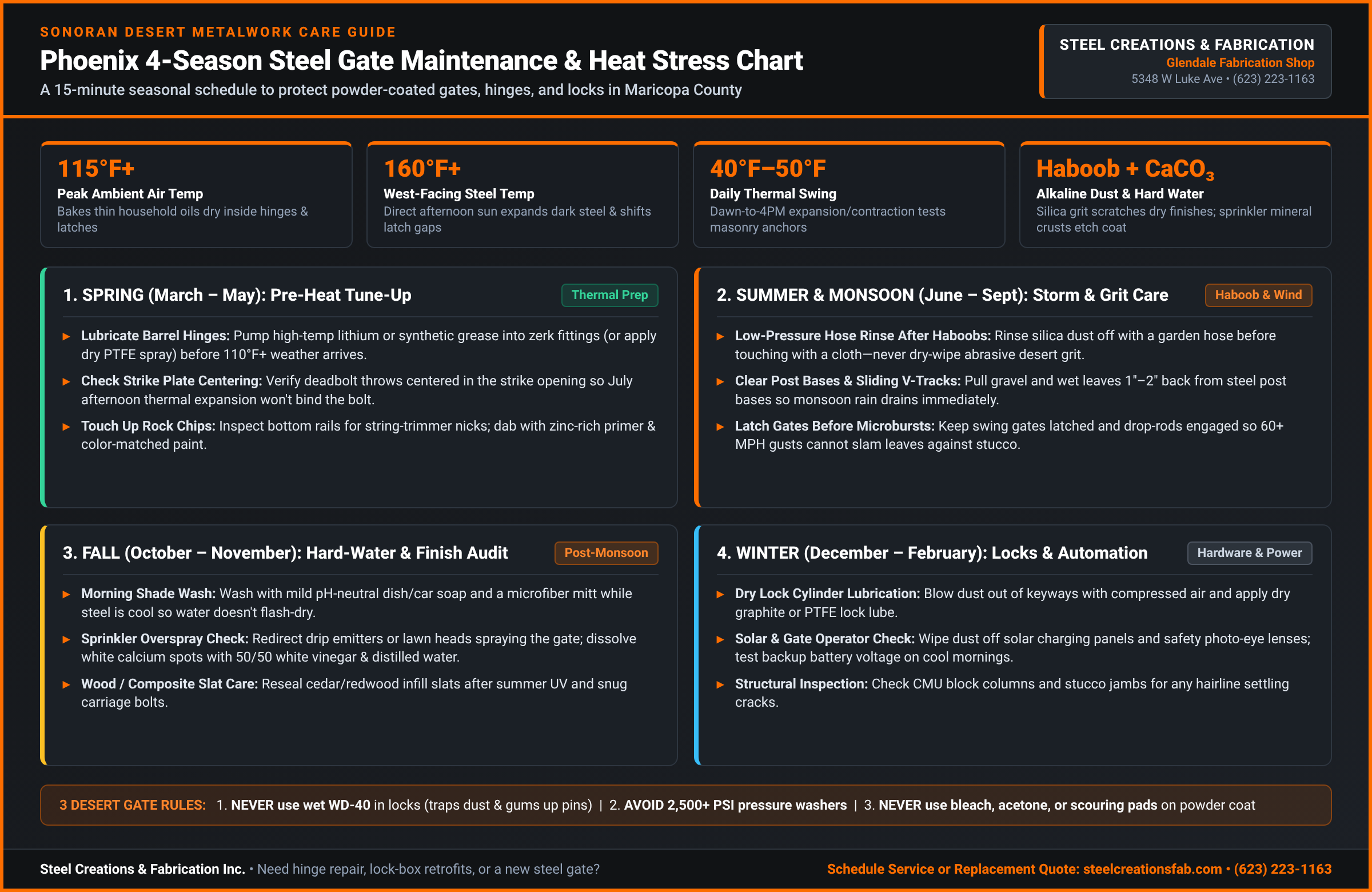
Quick-Reference Table: Phoenix 4-Season Gate Maintenance & Lubricant Guide
How to Safely Clean and Touch Up Powder-Coated Steel Gates
Baked-on powder coating is far tougher than liquid paint, but using the wrong cleaner or pressure washer can strip its UV protection. Follow these shop-proven rules:
- Skip High-Pressure Washers & Harsh Solvents: A garden hose with a standard spray nozzle is all you need. Avoid 2,500+ PSI pressure-washer tips (which can force water past seals and chip edges) and never use bleach, muriatic acid, acetone, or abrasive scouring pads on powder-coated steel.
- Use Mild Soap & Shade: Wash your gate early in the morning when the steel is cool to the touch so soapy water doesn’t flash-dry and leave mineral spots. Rinse thoroughly and towel-dry decorative scrollwork or flat horizontal slats with a clean microfiber cloth.
- Seal Chips Immediately: If a rock from a weed trimmer chips the coating down to bare silver steel, scuff the tiny spot lightly with fine-grit sandpaper, wipe it clean with isopropyl alcohol, apply a dab of rust-inhibiting metal primer, and seal it with color-matched touch-up paint.
When to Call Steel Creations for Professional Gate Adjustment or Repair
While routine washing and lubrication are easy DIY tasks, certain symptoms mean your gate’s structural mounting needs attention from an experienced fabricator before a small issue becomes a safety hazard:
- Gate Leaf Sagging or Dragging on Concrete/Pavers: Often caused by soil settling under a fence post, loose masonry anchors in a hollow stucco column, or worn hinges on a heavy double RV gate.
- Cracked Stucco or Loose Block Around the Hinge Jamb: If a gate was mounted directly to an unreinforced CMU block wall without a steel footing post, the leverage of the swinging leaf can pull the top anchor loose.
- Broken Hinge Welds or Damaged Lock Boxes: We can re-weld hinges, upgrade worn hardware to heavy-duty greaseable barrel hinges, or retrofit a weld-in security lock box with a reach-through guard (see our custom security gates guide for hardware options).
Frequently Asked Questions About Steel Gate Maintenance in Phoenix
- How often should I wash and lubricate my steel gate in Phoenix? Wash off desert dust every 3 to 4 months (and after major summer haboobs), and lubricate hinges and latches twice a year—once in spring before 110°F+ heat arrives, and once in autumn after monsoon season ends.
- Is WD-40 good for gate hinges and locks in Arizona? No. Standard WD-40 is a solvent and water displacer that evaporates quickly in Phoenix heat and leaves a sticky film that traps desert dust. Use high-temperature lithium/synthetic grease on hinge zerk fittings and dry PTFE or silicone spray on latches and locks.
- How do I remove white hard-water spots from a black powder-coated gate? Mix a 50/50 solution of white distilled vinegar and distilled water, wipe it onto cool metal with a soft cloth for a few minutes to dissolve the calcium buildup, rinse thoroughly with clean water, and redirect the offending sprinkler head.
- Why does my gate latch stick in the summer afternoon but work fine in the morning? Direct afternoon sun heats dark steel past 150°F, causing thermal expansion that slightly closes the gap between the gate leaf and the latch post. A minor hinge adjustment solves this so the latch clears at all temperatures.
- Can Steel Creations build a replacement gate if my old wood or rusted iron gate is beyond repair? Yes. From our shop at 5348 W Luke Ave in Glendale, we custom-fabricate and install replacement steel courtyard gates, side yard gates, RV gates, and security screen doors across Phoenix and the West Valley.
Need a Gate Upgrade or Custom Replacement in Phoenix or the West Valley?
Whether you want advice on caring for your custom ironwork or you are ready to replace a sagging, weathered gate with a heavy-gauge steel upgrade built in Glendale, our team is here to help. Contact Steel Creations & Fabrication online or call (623) 223-1163 for a free consultation and quote.